Chaubatia Garden is a 600-acre government fruit orchard in Ranikhet, Uttarakhand, open Tuesday–Sunday, 9 AM–5 PM, entry ₹20. Located 10 km from Ranikhet at 1800 metres altitude. Grows apple, peach, plum, apricot, walnut and strawberry. Best time: March–May (blossoms) or October (apple harvest).
About Chaubatia Garden, Ranikhet
Chaubatia Garden is a 600-acre government orchard in Ranikhet, Almora district, Uttarakhand, maintained by the Uttarakhand Horticulture and Food Processing Department. Located 10 km from Ranikhet town at 1800 metres (5,905 feet) altitude, it is one of the largest government-run fruit orchards in the Kumaon Himalayan region. The orchard was established in the early 20th century during British administration and has been operational for over 100 years.
The garden covers fruit trees of 8 major varieties — apple, peach, plum, apricot, pear, walnut, cherry and strawberry — across its 600 acres. It also contains a fruit research station, a rose garden and a small natural history museum. On clear days, the garden provides direct views of Nanda Devi (7816 m), Trishul and other Himalayan peaks to the north-east.
On-ground verified: Our team has visited Chaubatia Garden across multiple seasons — during the March–April blossom period and the October apple harvest. Timings, entry details and visitor tips in this guide are based on direct observation and conversations with garden staff at the site.
History of Chaubatia Garden
Chaubatia Garden was established around 1869 during the British colonial period, when the administration identified Ranikhet's Kumaon hills as ideal terrain for temperate fruit cultivation. The cool climate and fertile soil at 1800 metres altitude supported apple, peach, apricot and plum varieties introduced from Europe and Kashmir. It is one of the oldest government-managed orchards in Uttarakhand.
After independence, the garden came under the Uttar Pradesh (now Uttarakhand) Horticulture and Food Processing Department, which expanded the fruit cultivation programmes and established a fruit research station on the premises. The research station develops high-altitude apple and stone-fruit varieties suited to Kumaon's climate, supplying improved rootstock to local hill farmers across Almora and Nainital districts. Over 150+ farmer families in surrounding villages benefit from the research station's outputs annually.
Today Chaubatia is both a working government orchard and a popular tourist destination. Local farmers in the surrounding villages benefit from the rootstock and improved varieties developed at the Chaubatia research station. The garden has also become a model for sustainable orchard management at high altitudes in Uttarakhand. Most visitors combine Chaubatia with a Ranikhet tour package that also covers the Jhula Devi Temple and the Ranikhet Golf Course on the same day.
What Can You See and Do at Chaubatia Garden?
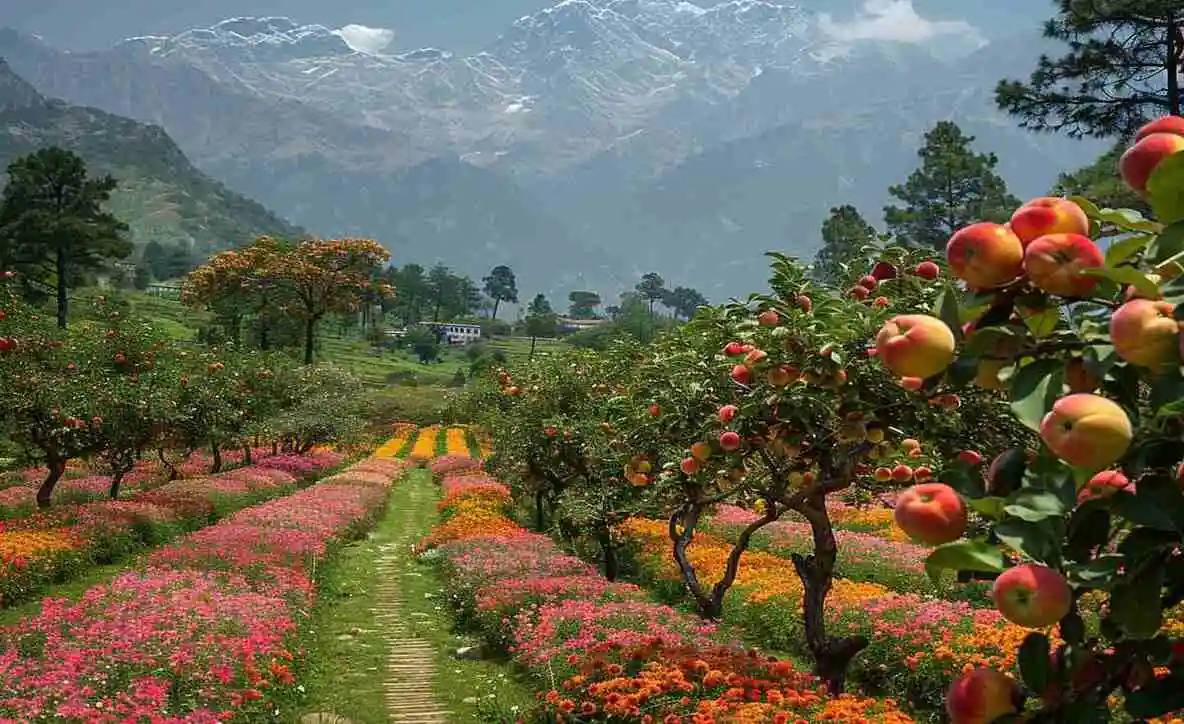
The main draw of Chaubatia Garden changes with the season. In spring (March–May), the 600-acre garden is covered in pink and white blossoms — apple, peach, plum and apricot trees in flower against the backdrop of snow-capped Himalayan peaks. The blossom season typically peaks in the second and third week of March for peach and plum, and April for apple.
From June to September, the trees carry ripening fruit. Apple picking begins around August–September. The rose garden within the premises blooms from April through June. A small natural history museum near the entrance has exhibits on local Kumaon flora and fauna.
The garden also has a dedicated strawberry section and a small jam and dried-fruit outlet near the entrance gate where Chaubatia-produced apple jam, fresh apples and dried apricots are sold at government rates — significantly cheaper than market prices.
Chaubatia Garden is a 600-acre government orchard in Ranikhet, Uttarakhand, maintained by the state Horticulture Department. Located 10 km from Ranikhet town at 1800 metres altitude, the garden grows apple, peach, plum, apricot, pear, walnut and strawberry. It is open Tuesday to Sunday, 9:00 AM to 5:00 PM, with an entry fee of ₹20 per person. It also houses a fruit research station and a rose garden.
Chaubatia Garden — Quick Facts at a Glance
| Attribute | Details |
|---|---|
| Location | 10 km from Ranikhet town, Almora district, Uttarakhand |
| Altitude | 1,800 metres (5,905 feet) |
| Area | Approximately 600 acres |
| Managed By | Uttarakhand Horticulture Department |
| Timings | 9:00 AM – 5:00 PM, Tuesday to Sunday (closed Mondays) |
| Entry Fee | ₹20 per person (nominal) |
| Fruits Grown | Apple, peach, plum, apricot, pear, walnut, cherry, strawberry |
| Other Attractions | Rose garden, fruit research station, natural history museum |
| Nearest Railway Station | Kathgodam (80 km, ~2.5 hrs) |
| Nearest Airport | Pantnagar (110 km, ~3 hrs) |
| Distance from Nainital | 68 km (~2.5 hours by road) |
| Distance from Delhi | 350 km (~9–10 hours via Moradabad) |
What is the Best Time to Visit Chaubatia Garden?
Chaubatia Garden is accessible year-round. Each season offers a distinct experience. If you are planning a trip, check our Ranikhet tour packages which are timed to the best season for the orchard. You can also combine this with a visit to Kausani (56 km) for a longer Kumaon circuit.
| Season / Month | Weather | What to See |
|---|---|---|
| March – May (Spring) | 10–22°C, mild | Full blossom season — pink and white flowers on all fruit trees; rose garden blooms; best for photography |
| June – July (Summer) | 15–28°C, pleasant | Strawberry and early peach season; lush green orchard; combine with other Ranikhet sights |
| August – Sep (Monsoon) | 18–25°C, rain | Fruit-laden trees; lush landscape; some days misty and overcast; fewer tourists |
| October – November | 8–20°C, clear | Apple harvest season; crystal-clear Himalayan views of Nanda Devi; highly recommended |
| December – February (Winter) | 0–12°C, cold | Trees bare; possible snow; garden open but limited fruit activity; peaceful atmosphere |
How to Reach Chaubatia Garden from Delhi, Nainital & Kathgodam?
| From | Distance | Travel Time | Mode |
|---|---|---|---|
| Ranikhet Town | 10 km | 20–25 min | Taxi / Auto |
| Jhula Devi Temple | 4 km | 8–10 min | Taxi (same road) |
| Kathgodam (Railway) | 80 km | 2.5 hrs | Taxi |
| Nainital | 68 km | ~2.5 hrs | Road via Bhowali |
| Pantnagar (Airport) | 110 km | ~3 hrs | Taxi |
| Delhi | 350 km | 9–10 hrs | Road via Moradabad |
By Air
Nearest airport: Pantnagar (110 km). Taxi available from Pantnagar to Ranikhet in about 3 hours. From Ranikhet take a local taxi to Chaubatia (10 km).
By Train
Nearest railway station: Kathgodam (80 km). Regular trains from Delhi, Lucknow and Moradabad. Taxis available at Kathgodam for Ranikhet.
By Bus
Uttarakhand Roadways buses from Delhi (Anand Vihar), Nainital, Almora and Haldwani reach Ranikhet. Take a local taxi or auto to Chaubatia (10 km).
By Taxi / Self Drive
From Delhi: NH9 via Moradabad–Rampur–Haldwani–Kathgodam–Ranikhet (approx. 350 km, 9–10 hrs). From Nainital: 68 km via Bhowali.
Combine With
Chaubatia Garden is on the same Chaubatia Road as Jhula Devi Temple (4 km before). Plan both in a single half-day outing from Ranikhet town.
What Should You Know Before Visiting Chaubatia Garden?
- Closed on Mondays: The garden is closed every Monday. Plan your visit from Tuesday to Sunday.
- Morning visit recommended: Visit in the morning for the clearest Himalayan views. Clouds often gather over the peaks by afternoon.
- Blossom season photography: March and April offer the best photography opportunities when all trees are in bloom. Carry a wide-angle lens for the orchard landscapes.
- Fresh produce: Apple jam, fresh apples, apricots and dried fruits are sold at the small shop near the entrance. Prices are reasonable as these are directly from the government orchard.
- Rose garden: The rose garden is at its best from April to June — do not miss it while walking the orchard.
- Combine with Jhula Devi Temple: Jhula Devi Temple is 4 km down the same road towards Ranikhet. Cover both in one half-day trip.
- Parking: Adequate parking is available at the garden gate. Road leading to the garden is paved but narrow — drive carefully.
- Time required: Allow 1.5 to 2 hours for a leisurely walk through the orchard, rose garden and museum.
- Walking shoes: Paths inside the orchard are unpaved in sections — wear comfortable closed-toe walking shoes, especially during or after rain.
- Photography: Photography is generally allowed inside the garden. A nominal camera fee (around ₹10–20) may apply at the gate. The orchard lanes between fruit trees offer the best composition shots.
- Suitable for families and senior visitors: The garden terrain is relatively flat and easy to walk. It is suitable for children, senior citizens and first-time visitors. Most of the main orchard area is accessible on a single walking path.
- TVI tip: Guests on our Ranikhet packages who visit Chaubatia in October consistently rate the Himalayan view from the upper orchard end as the trip highlight — arrive before 10 AM for the clearest sightline to Nanda Devi.