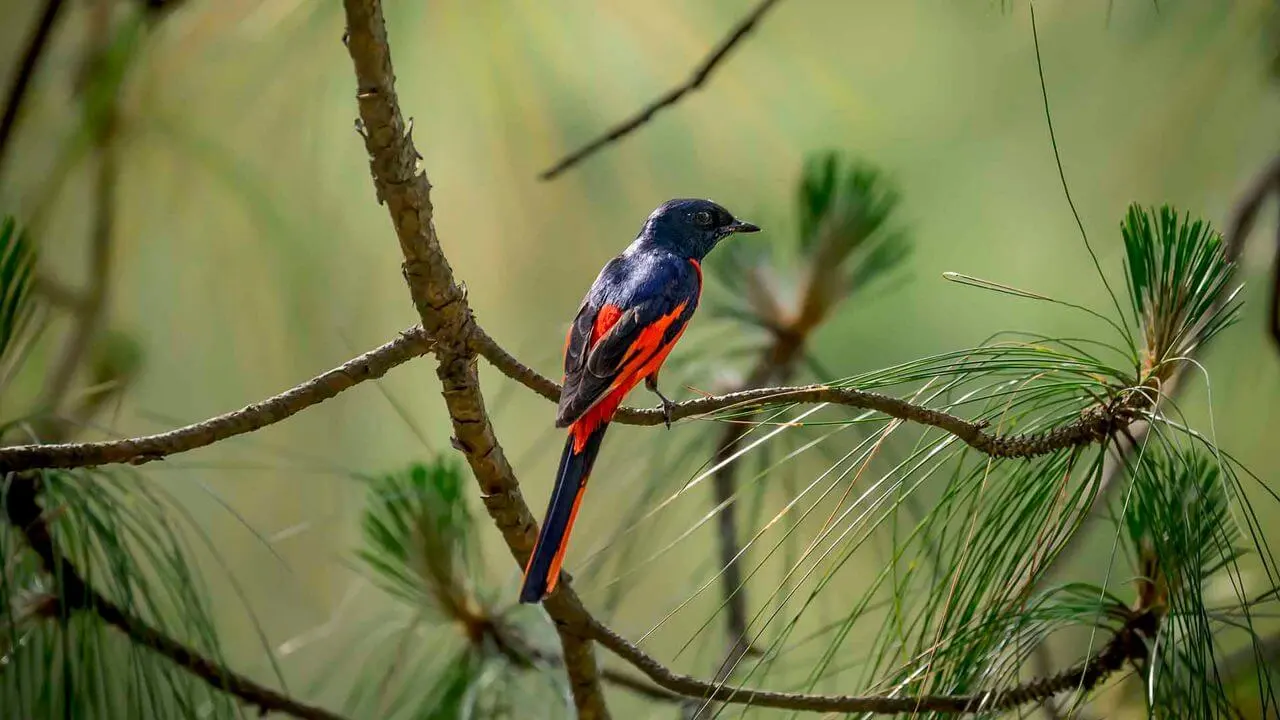
Binsar Wildlife Sanctuary — 47.07 sq km of pristine Himalayan oak and rhododendron forest in Almora district, Uttarakhand at 1,800–2,420m altitude. Home to leopard, Himalayan bear and 200+ bird species. Zero Point summit offers a 300 km Himalayan panorama. Open 7 AM–5 PM daily. Plan your Binsar wildlife tour — WhatsApp +91-8057146497.
47.07 sq km · Established 1988 · Altitude 1,800–2,420 m · Almora District, Uttarakhand
47.07 sq km Forest 2,420 m Zero Point 33 km from Almora 200+ Bird Species Open 7 AM – 5 PM
Binsar Wildlife Sanctuary is a protected forest reserve in Almora district, Uttarakhand, covering 47.07 sq km of dense Himalayan oak and rhododendron forest at an altitude of 1,800 to 2,420 metres. Established in 1988 by the Uttarakhand Forest Department, the sanctuary is home to leopard, Himalayan black bear, barking deer and over 200 species of birds. The famous Zero Point inside the sanctuary offers a 300 km panoramic view of Himalayan peaks including Nanda Devi, Trishul and Kedarnath.
Binsar Wildlife Sanctuary sits quietly in the hills above Almora — away from the crowds, deep inside a forest of ancient oak, rhododendron and Himalayan cedar trees. Unlike many wildlife destinations in India, Binsar has no buffer zone settlements inside the sanctuary boundary.
The only structure inside is the Khali Estate — formerly the summer residence of the British Commissioner of Kumaon — which today operates as a rest house. As per Uttarakhand Forest Department records, the sanctuary was formally notified in 1988 and covers 47.07 sq km of protected temperate forest. This means the forest remains genuinely undisturbed, and that is exactly what makes Binsar special.
The Mary Budden Estate at Binsar is a well-known heritage property within the sanctuary boundary — a restored colonial-era bungalow set amid the oak forest. Staying at Mary Budden Estate puts you inside the sanctuary itself, with the forest at your doorstep from before dawn.
For birdwatchers, Binsar is among the best sites in the western Himalayas. The Uttarakhand Forest Department has recorded over 200 bird species here. If you are planning a broader Binsar tour package, combine the sanctuary with Jageshwar Dham (52 km) and Kausani (55 km) for a complete Kumaon itinerary.
Tour Venture India's On-Ground Insight
Our teams have escorted birdwatching groups to Binsar every season. The most productive sightings — Himalayan monal, cheer pheasant and the occasional leopard crossing — happen on the Khali Estate to Zero Point trail between 6 AM and 8 AM, not at the main gate. We recommend staying inside the sanctuary (Mary Budden Estate or KMVN Khali Camp) rather than Almora, so you can reach the trail at first light without a long drive.
Detail
Information
Location
Almora District, Uttarakhand — 33 km from Almora
Area
47.07 sq km of protected Himalayan forest
Altitude
1,800 m to 2,420 m (Zero Point summit)
Established
1988
Forest Type
Temperate oak, rhododendron, Himalayan cedar, pine
Key Animals
Leopard, Himalayan black bear, barking deer, jungle cat, red fox
Bird Species
200+ recorded — Himalayan monal, cheer pheasant, khalij pheasant
Timings
7:00 AM to 5:00 PM, every day
Entry Fee
Indian: ₹150 per person · Foreign: ₹600 per person · Camera: extra
Nearest Railhead
Kathgodam — 126 km (approx. 3.5 hrs via Almora)
Zero Point View
300 km panorama — Nanda Devi, Trishul, Kedarnath, Chaukhamba
What Animals and Birds Are Found in Binsar Wildlife Sanctuary?
The most common question before visiting: will I actually see animals in Binsar? You will almost certainly see birds. There is a reasonable chance of spotting deer and smaller mammals. Leopard sightings happen, but they are rare and depend on luck and time of day.
As per the Uttarakhand Forest Department's wildlife survey records, Binsar supports one of the most diverse bird communities in the western Himalayas — with 200+ species recorded within the 47.07 sq km sanctuary.
Mammals
Leopard is the sanctuary's most iconic animal — present in the forest but rarely seen by day visitors. Himalayan black bear is more regularly spotted, especially near fruiting trees. Other animals include barking deer, jungle cat, red fox, yellow-throated marten, porcupine and Himalayan goral on the higher ridges.
Birds — 200+ Species
Himalayan monal — the state bird of Uttarakhand — is frequently seen here and is unmistakable with its iridescent plumage. Cheer pheasant, khalij pheasant and koklass pheasant are also residents. Raptors include lammergeier, mountain hawk-eagle and Eurasian eagle-owl. Winter brings Central Asian migratory species.
Flora
The forest is dominated by banj oak (Quercus leucotrichophora) — the same species that once covered most of Kumaon before large-scale felling. Rhododendron (buraans) blooms a deep crimson red in March and April. Himalayan cedar, ringal bamboo and over 100 species of medicinal herbs are also recorded in the sanctuary.
When is the Best Time to Visit Binsar Wildlife Sanctuary?
Binsar can be visited year-round, but what you experience changes significantly with the season. Here is what to expect in each season so you can choose the right time for your visit.
March to May — Best for Birdwatching and Rhododendron
This is the most popular season for birdwatchers and nature lovers. The rhododendron (buraans) forest bursts into crimson-red bloom from March, covering entire hillsides. Bird activity is at its peak — Himalayan monal and pheasants are most visible in the early morning hours. Temperatures are pleasant, ranging from 10°C to 22°C during the day. The forest trails are dry and easy to walk.
June to September — Monsoon Season (Not Recommended)
The forest turns intensely green and lush during the monsoon, and waterfalls become active. However, mountain views are completely blocked by cloud cover, leech activity is high on the trails, and the roads to Binsar can sometimes be affected by landslides. Most visitors who come specifically for Zero Point views or birdwatching avoid this season.
October to November — Best for Himalayan Views
The post-monsoon skies over Binsar are crystal clear. The Zero Point panorama is at its most spectacular during these two months — on clear mornings, over 100 Himalayan peaks are visible simultaneously, including Nanda Devi, Trishul, Kedarnath and Chaukhamba. The oak forest turns golden. Temperatures are comfortable. This is the best season for photography at Zero Point.
December to February — Winter and Snow Season
Temperatures drop sharply and Zero Point receives 2–3 feet of snow in heavy winters. The forest road can become impassable. Some Central Asian migratory birds arrive during this period. Only suitable for visitors who specifically want a winter mountain experience and are prepared for temperatures as low as -5°C.
What Are the Top Things to Do in Binsar Wildlife Sanctuary?
Binsar is not a drive-through wildlife park — it rewards those who walk slowly, listen and look carefully. Here are the main activities that make a Binsar visit worthwhile.
Zero Point Trek
The trek from Khali Estate to Zero Point is about 5 km one way through dense oak forest — an easy 2 to 3 hour return walk. At 2,420 m, the summit looks out over a 300 km arc of the Himalayas — Nanda Devi, Trishul, Kedarnath and Chaukhamba all at once. One of the finest viewpoints in Uttarakhand accessible by an easy walk.
Birdwatching
Binsar is consistently rated among the top birdwatching destinations in the western Himalayas. Dawn walks from 6 AM yield the most sightings. Forest Department naturalist guides are available at Khali Estate. For serious birders, plan to stay inside the sanctuary for at least two nights.
Forest Walks
Several forest trails run through the oak and rhododendron forest. These are not marked tourist paths — going with a guide is strongly recommended. The forest in March–April, with rhododendron in full bloom and birdsong everywhere, is a genuinely extraordinary experience.
Binsar Mahadev Temple
An ancient Shiva temple about 5 km from the main sanctuary road — a quiet, atmospheric place with a natural spring and a canopy of old deodar trees. Worth combining with the Zero Point visit on the same day.
Nature Photography
Binsar offers three distinct photography subjects — the Himalayan panorama at Zero Point (best at sunrise in October–November), rhododendron forest in bloom (March–April), and bird and wildlife on the trails. The misty oak forest light in early morning is hard to find anywhere else in Kumaon.
Stay at Mary Budden Estate
Staying inside the sanctuary — at Mary Budden Estate or the PWD Khali Estate — transforms the visit entirely. You are in the forest from before dawn to after dusk, when wildlife is most active. Day visitors who arrive at 10 AM and leave by 3 PM miss the best hours. Advance booking is essential.
How to Reach Binsar Wildlife Sanctuary from Delhi, Kathgodam and Almora?
Binsar Wildlife Sanctuary is 33 km from Almora and 126 km from Kathgodam — the nearest major railhead.
The approach road from Almora passes through Syahi Devi and enters the sanctuary gate. Private vehicles are allowed up to Khali Estate — heavy vehicles are not permitted inside the sanctuary as per Uttarakhand Forest Department rules.
By Train
Nearest station: Kathgodam (NKW) — 126 km from Binsar. Trains from Delhi: Ranikhet Express and Uttaranchal Express (6–7 hrs). From Kathgodam, hire a cab via Almora to Binsar — approximately 3.5 hours.
By Road
Delhi to Binsar is approximately 400 km via Moradabad–Haldwani–Almora — about 9 to 10 hours by private cab. From Almora, Binsar is 33 km — roughly 1.5 hours by private taxi via the Syahi Devi–Khali road.
By Bus
UPSRTC buses run from Delhi, Haridwar and Haldwani to Almora. From the Almora bus stand, hire a local taxi for the 33 km drive to Binsar — approximately 1.5 hours on a mountain road.
By Air
Nearest airport: Pantnagar (PGH) — approximately 150 km from Binsar. Flights available from Delhi. From Pantnagar, hire a cab via Haldwani and Almora — about 4 to 5 hours.
Entry fee is collected at the sanctuary gate. Private vehicles are allowed up to Khali Estate — heavy or large vehicles are not permitted inside the sanctuary as per Uttarakhand Forest Department rules.
Which Places Are Near Binsar Wildlife Sanctuary?
Binsar Wildlife Sanctuary sits in the heart of the Kumaon region, which means several significant destinations are within easy driving distance — making it simple to combine Binsar with a broader Kumaon tour.
Binsar Wildlife Sanctuary is a 47.07 sq km protected forest in Almora district, Uttarakhand, at 1,800–2,420 m altitude. Established in 1988, it is home to leopard, Himalayan black bear and 200+ bird species. Zero Point at 2,420 m offers a 300 km Himalayan panorama. Timings: 7 AM to 5 PM daily. Entry: ₹150 for Indian nationals. 33 km from Almora, 126 km from Kathgodam.
Binsar is a 47.07 sq km protected wildlife reserve in the Almora district of Uttarakhand, established in 1988. It covers dense Himalayan oak, rhododendron and cedar forest at altitudes of 1,800 to 2,420 metres. The reserve is home to leopard, Himalayan black bear, barking deer and over 200 species of birds, and is widely regarded as one of the best birdwatching destinations in the western Himalayas.
What animals are found in Binsar Wildlife Sanctuary?
The sanctuary's animals include leopard, Himalayan black bear, barking deer, jungle cat, red fox, yellow-throated marten and porcupine. Over 200 bird species have been recorded here — including Himalayan monal (state bird of Uttarakhand), cheer pheasant, khalij pheasant, lammergeier and mountain hawk-eagle. The forest also supports 100+ medicinal plant species.
What are Binsar Wildlife Sanctuary timings and entry fees?
The sanctuary is open daily from 7 AM to 5 PM. Entry fee for Indian nationals is ₹150 per person; for foreign nationals it is ₹600 per person. Camera fees are charged separately. Private vehicles are permitted up to Khali Estate — heavy or large vehicles are not allowed inside.
What is the best time to visit Binsar Wildlife Sanctuary?
The best seasons are March–May for rhododendron blooms and peak bird activity, and October–November for the clearest Himalayan views from Zero Point. June to September is best avoided due to cloud cover, leeches on trails and occasional road disruptions. December to February brings snow and temperatures as low as -5°C.
How to reach Binsar Wildlife Sanctuary from Delhi?
From Delhi, the sanctuary is approximately 400 km by road — about 9 to 10 hours via Moradabad and Haldwani. By train, take the Ranikhet Express or Uttaranchal Express to Kathgodam (126 km away), then hire a taxi via Almora — around 3.5 hours. The nearest airport is Pantnagar, about 150 km away. For Binsar tour packages with cab and stay, WhatsApp Tour Venture India at +91-8057146497.
What is Zero Point in Binsar and how do I reach it?
Zero Point is the highest accessible viewpoint inside the reserve at 2,420 m altitude — reached by a 5 km forest trail from Khali Estate, a 2 to 3 hour return walk. On clear days it offers a 300 km panoramic view of the Himalayas including Nanda Devi (7,816 m), Trishul, Kedarnath, Chaukhamba, Nanda Kot and Panchachuli. October and November give the clearest views.
What is Mary Budden Estate in Binsar?
Mary Budden Estate is a heritage property inside the sanctuary boundary — a restored colonial-era bungalow set in the oak forest. Staying here gives access to the forest from before dawn, which is the best time for birdwatching and wildlife sightings. It is one of the most atmospheric stays in all of Kumaon. Advance booking is essential during peak seasons.
Where is Binsar Wildlife Sanctuary located?
The sanctuary is located in the Almora district of Uttarakhand, India — 33 km from Almora town and approximately 126 km from Kathgodam railway station. It lies in the Kumaon Himalayas at an altitude of 1,800 to 2,420 metres. GPS coordinates: 29.7214°N, 79.7422°E.
Is Binsar Wildlife Sanctuary good for birdwatching?
Yes — it is one of the best birdwatching destinations in the western Himalayas. The Uttarakhand Forest Department has recorded over 200 bird species here, including Himalayan monal, cheer pheasant, khalij pheasant, lammergeier and mountain hawk-eagle. The best time is March to May, with dawn walks at 6 AM giving the most sightings.