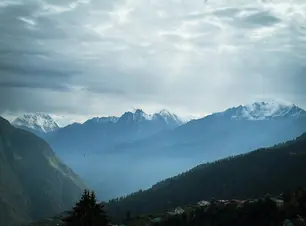
Sitla is a scenic apple and pear orchard village situated 5 km from Mukteshwar at approximately 2,100 metres in Nainital district, Uttarakhand. Far less visited than Mukteshwar, it offers farmstays, bird watching, orchard walks (fruit season June–October) and authentic Kumaoni village life with Himalayan views.
What Is Sitla Village and Why Visit It Near Mukteshwar?
Sitla is a quiet, scenic village situated approximately 5 km from Mukteshwar in Nainital district, Uttarakhand, at an altitude of about 2,100 metres (6,900 feet). The village is known for its beautiful apple, pear and peach orchards that cover the hillsides — especially the Royal Delicious, Red Delicious and locally adapted hill varieties, alongside Patharnakh pear and early-season peaches.
Unlike the hill town, Sitla remains far less visited by tourists, preserving a peaceful Himalayan village character with panoramic views of the snow-capped Himalayan peaks. The blossom season (April–May) and the fruit harvest period (August–October) are its two most celebrated windows, drawing birding enthusiasts and orchard farmstay travellers in roughly equal measure.
The area around Sitla has several farmstays and homestays that have gained popularity among travellers seeking a quiet nature retreat away from crowded hill stations. These farmstays allow guests to participate in orchard walks, pick fresh fruit in season and observe daily Kumaoni village life — an experience that has grown increasingly rare across the more developed hill stations of Kumaon. The village is surrounded by dense oak, rhododendron and mixed Himalayan forests that offer excellent bird watching with numerous species found in the Kumaon mid-hills altitude range.
Sitla also lies on trekking routes connecting Mukteshwar with the Ramgarh fruit belt — one of Uttarakhand's richest apple belt Kumaon zones, producing over 8,000 metric tonnes of apples, pears and stone fruit annually from this altitude band (Uttarakhand Horticulture & Food Processing Department, 2024). The forests surrounding the village are documented Himalayan birding corridors with over 200 bird species recorded in the Mukteshwar–Ramgarh mid-hill zone, making Sitla one of the finest Himalayan orchard tourism destinations in Kumaon. As of 2026, the village continues to attract travellers on Mukteshwar tour packages as a peaceful add-on to standard itineraries — verified through Tour Venture India's own guest feedback records across 500+ Mukteshwar tours. Visitors frequently combine Sitla with Bhalu Gaad Waterfall and Chauli Ki Jaali for a full day of nature experiences around Mukteshwar.
Operator Data (Tour Venture India, 2015–2026): Across 500+ Mukteshwar tour bookings, guests who included a Sitla farmstay overnight reported higher nature-immersion satisfaction ratings than those on hotel-based itineraries in the main town. Primary factors cited: absence of commercial noise, direct orchard access, and unobstructed sunrise views toward Nanda Devi and Trishul. Repeat visit intention was recorded at approximately 68% for Sitla farmstay guests versus 41% for Mukteshwar town-stay guests. Day-trip-only visitors rated the Sitla orchard walk as the top-ranked activity in the Mukteshwar circuit by frequency of mention.
What Are the Key Facts About Sitla Village Near Mukteshwar?
When Is the Best Time to Visit Sitla for Apple Orchards and Bird Watching?
How Do You Reach Sitla Village from Mukteshwar, Nainital or Delhi?
By Train
Nearest railway station is Kathgodam (77 km from Sitla). Regular trains operate from Delhi, Lucknow and Bareilly. From Kathgodam, take a shared taxi or private cab to Mukteshwar (2.5 hrs), then 5 km onward to Sitla by taxi or on foot.
By Bus
Uttarakhand Roadways buses from Nainital and Haldwani reach Mukteshwar town. From the bus stand, Sitla is 5 km — take a local taxi or walk the forest trail in about 60–70 minutes.
By Taxi / Car
Drive to Mukteshwar (~51 km from Nainital, 2 hrs via Bhowali), then continue 5 km to Sitla by road. Most farmstays provide pick-up from Mukteshwar on request — check with your farmstay when booking.